

When drafting this post in my head I thought my interest in the topic would be easily explained, “what America does, the UK has a horrible habit of mimicking a couple of years later.”
That was in reference to the various 5-week bans, and ‘heartbeat bills’ in May that have been trending topics in the US. Even as I finished editing this post the city council of Waskom, Texas passed ordinance to prevent abortion clinics from opening in the city.
Then Jeremy Hunt opened his mouth.
So much for ‘a couple of years later’.
You want to believe it’s ‘sound bite policy’ – something said just to appeal to a voter demographic. However, considering we’re in the timeline where a candidate unabashedly suggested abolishing council housing, you can’t blame me for feeling a need to brace and buttress my opinions.
REVIEW ★ ★ ★ ⅔
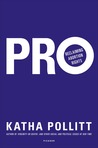 Pro: Reclaiming Abortion Rights by Katha Pollitt
Books about the abortion debate are controversial, Pro: Reclaiming Abortion Rights will be no different. Appealing to the ‘muddled-middle’, here Katha Pollitt presents an unapologetic examination of anti-abortion rhetoric and defence of reproductive justice’s credo.
As a matter of housekeeping, the use of the term ‘anti-abortion’ here is to be consistent with the book, and to differentiate between those who label themselves pro-life while only opposing access to the procedure, and those who work reduce the need for abortions.
Pro tackles three elements of the abortion debate: what are the key anti-abortion arguments, how accurate are these arguments, and how can the pro-choice side present a stronger opposition. Contrary to my dry explanation, the text is accessible and reads with personality; think ‘transcript of a feminist podcast’.
Pollitt examines the key rhetoric of anti-abortion advocates unreservedly and raises questions that need to be asked. If the aim is to reduce unwanted pregnancies, why not advocate for extensive sex-ed and access to birth control? If the aim is to reduce the number of abortions performed, why target the procedure but not obstacles to parenthood like poverty and access to childcare? She also questions the, frankly, paternalistic roots of ‘permit but discourage’ compromises – like mandatory waiting periods and parental consent – and the limp-wristed defence of abortion that consistently frames women as victims.
However, as reasonable as Pollitt’s examination is, I worry that the book preaches to the proverbial choir. As abortion has shifted from a debatable topic to a marker of political identity, perhaps Pollitt wrote this knowing those opposed would only sneer at it. This is potentially the book’s main weakness. Writing on the assumption that her readers would be pro-choice, Pollitt’s tone sometimes shifts into soapboxing, and at times sarcasm. While for a pro-choice reader it can be vindicating in an ‘amen to that’ kind of way, I doubt it would appeal otherwise. I can see more than a few of the undecided or opposed being entirely put off reading. Given that the book aimed to address the debate, it’s counterproductive to chase readers back into their echo chambers.
The text is very America-centric, all the legislation mentioned is American though Pollitt happily references cases such as that of Savita Halappanavar* in Ireland. The book also overlooks the involvement of women of colour – both as defenders and advocates of reproductive healthcare, and individuals disproportionately affected by access to abortion – and at worst comes across as propping up white feminism exclusivity. The titular point, how the pro-choice side can reclaim the discussion, was the briefest part of the book. While yes, political expression should not be spoon fed, Pollitt’s viewpoints on this part could have been fleshed out a bit more for the sake of providing a clear opposition.
Despite its flaws; I would still recommend reading Pro, whether it’s a topic you are passionate about or one you would like to learn more about. If you are pro-life then it’s worth interacting with the opposing view to root out any inconsistencies in your opinions, no view is beneath fact-checking, after all. If you are one of the ‘muddled middle’, this book may help subvert some of the more harmful, but heart-tugging, exaggerations, and distortions thrown about by some of the less discerning anti-abortion advocates. As for those who are pro-choice, this is a sharp wake up call; if the defence of access to reproductive healthcare regurgitates variations of “the Pill isn’t just for sex”, and “what about fetal abnormalities”, the debate is going to be lost.
*Savita was refused an abortion in 2012 following an incomplete miscarriage, and whose death led to the passing of the Protection of Life During Pregnancy Act.
Pro: Reclaiming Abortion Rights, is published by Picador.
Follow the link to get your copy of Pro: Reclaiming Abortion Rights, by Katha Pollitt. It’s also available on Kindle, Kobo, and Nook.
We like Hive.co.uk. Hive pay their taxes.

Like my reviews? You can read all of them, and more, over at my blog!
If you enjoy my writing, want to see more, or enjoy being randomly generous, you can leave a tip in my ko-fi jar.

“Nah, this is pop culture now.”
 The Curvy Bookcase