For the love of a body like mine, Fat Girl Finishing School by Rachel Wiley.

Happy National Poetry Month to everyone in the US! As for readers in the UK like me, you’ve been in quarantine since last year, we’re not waiting to celebrate until October.

Thanks to the folx over at Button Poetry I have been able to read some brilliant poetry collections. I’ve reviewed one of their writer’s before, the marvellous Blythe Baird which you can read over here.  So let’s kick off with a new favourite of mine by Rachel Wiley who has recently celebrated the three year anniversary of her second collection, Nothing Is Okay.  For me, Rachel Wiley is the poet laureate of the plus size, a superfat Sappho.  Alright, I know that’s very gushy and yes, no one should be reduced to a single group appeal, and certainly Wiley would probably hate me writing that too… but… as a fat woman I felt so seen reading this.


Fat Girl Finishing SchoolFat Girl Finishing School by Rachel Wiley
★★★★★

Originally released in 2014, Fat Girl Finishing School is Rachel Wiley’s first full-length collection of poems. You may recognise her name from Button Poetry’s YouTube channel where Wiley’s performance of “10 Honest Thoughts on Being Loved by a Skinny Boy” went viral. It has recently been re-released, now with a beautiful new cover and a new introduction from the author, Fat Girl Finishing School is a powerful exploration of size, race, sexuality, and altogether living in a body outside the allowance of normal.

Wiley’s background as an actress, as she mentions in the new introduction, really lends itself to her poetry in the way it can build a connection with the reader. The pauses in things unsaid, the feelings just below the surface most of us experience, allows Wiley to weave a broad scope of topics together. Being fat, being bi-racial, being a member of the LGBT+ community, it’s all presented in such a way I think anyone could identify a part of themselves in, and, by extension, empathise with the rest.

While her most famous poem may be about size, for me a standout poem in this collection was Americana. It describes an experience at a high school party where a boy is happy to throw around the N-word but will kiss a bi-racial girl when no one’s looking. Clearly a poem about bi-racial identity in America, but for me – and I imagine a lot of fat women – it spoke to how we are made to feel about intimacy. While I won’t ever know the indignation that comes with the N-word being slurred in my face, but the self-hating ache of accepting attention from someone because “you’re fat and God knows when you’ll get another chance”? I felt that so hard I had to step away and make a mug of tea.

Likewise, while the lines “I am fat / no, you are beautiful / and I wonder why I cannot be both” hit differently when you are fat, I defy any ‘skinny’ person, particularly girls and women, not feel that too.

As a first collection, there is room to argue that there is a mix in terms of quality, but while I’m admitting this so you don’t think I’m completely biased, I don’t really think it matters. It’s a first collection, of course there is going to be a poem or phrasing that doesn’t quite sit right, and that’s before we get into the mess of personal taste. What I do think is interesting is how you can see Wiley’s development as a poet. If in one collection you can go from ‘reasonably good’ to ‘heart-thumping resonance’ just by flipping a page, I don’t know how you could not be excited to see what Wiley does next.

With an honesty that borders on raw, but never without humour or joy that is still radical to publicly hold when you’re fat, I cannot see how you would not enjoy this collection if you like modern or slam poetry at all. It’s bold and upfront, genuine with no hiding behind flowery or contrived imagery. In a fatphobic world that would rather bury the fat than embrace them, Fat Girl Finishing School is Rachel Wiley’s bold Lady Godiva ride of a love letter – middle fingers raised high – to her body and those like it, and I loved it.


Fat Girl Finishing School, by Rachel Wiley, is published by Button Poetry.

Follow the link to get your copy of Fat Girl Finishing School by Rachel Wiley.

I received my copy through NetGalley in exchange for a review, all opinions my own etc etc

Like my reviews?  You can read all of them, and more, over at my blog or you can follow me on Goodreads.

If you enjoy my writing, want to see more, or enjoy being randomly generous, you can leave a tip in my ko-fi jar.

Happy New Year, good luck everyone.

Tomorrow, and tomorrow, and tomorrow,
Creeps in this petty pace from day to day,
To the last syllable of recorded time

Good lord, it’s January.

I swear it was March only last week, and this weekend just gone we were in the middle of a heatwave that had my sister and I sat on the patio up to our knees in gallon buckets of cold water.

Everyone’s probably tired of hearing the soundbite about “may you live in interesting times” being a Greek (Roman?) curse, but I’m going to repeat it anyway. Without a doubt we are living through a year, or at the very least pandemic, that will have it’s own chapter in history books about the early twenty-first century. That said, for me there’s a disconnect between knowing I’m stuck in history and actually feeling like it. So far, touch wood, I’ve been lucky and the virus hasn’t touched my life (and, yes, I know, tempting fate by putting it into writing). My sister has received the first half of the vaccine, and I’ve spent most of the year furloughed, kept at home hopefully out of reach of infection. It’s a bit like how I felt about cancer before 2016; it exists but it doesn’t involve me, until it did.

It’s been a strange year hasn’t it? Some reading this have had life return to something resembling reality, others are ducking and dodging the combined irresponsibility of their governments and gleefully ignorant countrymen. For all the time I had to spend at home working on my own projects I didn’t get much done, and it’s not like I couldn’t bear to do anything I just didn’t have any gumption. Setting deadlines for myself didn’t work either, as I was (am) entirely aware that when there’s nothing to do time has no meaning except which meal you’re preparing. So that’s where I’ve been; I’ve not been ill, I’ve not given up on this blog, I’ve just been ‘here’. Actually I haven’t done a whole lot of anything… except play a lot of Dragon Age: Origins over the November lockdown.

I won’t say good riddance to 2020, and I won’t say anything hopeful about 2021 either – unlike apparently everyone on social media. Since 2016 we’ve looked ahead on December 31st with a “well it can’t get worse!”. And then it did, steadily every year that followed. Just when you thought fate/chance/luck/nature had no moves left to play, something else was thrown at us. For all we know we could be jinxing it and whatever Trickster God is in charge of the universe clearly doesn’t like being challenged. I swear to God it’s like being the neighbours of the idiots who dug up a Jumanji board. Which is why I’ll say good luck. Whether it’s a well needed blessing to survive whatever disaster, or political machinations trample over us, or gentle encouragement to embrace whatever freedom we find coming out the other side.

So no resolutions, no plans, no “202x is going to be my year!”, just a very neutral recognition that 2021 is going to be a year. It is after 2020, it will lead to 2022, and when it’s over we’ll all say “happy new year” again.

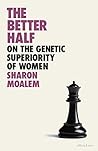
It’s all in the chromosomes. The Better Half, by Sharon Moalem.

My God what day is it?

I hope you’re all well and keeping at a safe social distance.  I am currently furloughed from work but the book news doesn’t stop.  Following a fantastic read in early March of Invisible Women by Caroline Criado Perez I haven’t been able to stop thinking about what all ‘this’ might mean for women.  Are we in the testing groups for coronavirus vaccines?  Will any vaccine or treatment respond differently to female bodies?  Hang on, more women surviving than men?  Or so the man on the news said.  My initial reaction was that it must be due to behaviours.  Women being more conscious with hand washing, men occupying more positions in work deemed essential services (wrong there btw), men being less likely to go to a doctor.  But then the flu affects men worse as well, I couldn’t help but wonder why.  Conveniently this cropped up in the middle of reading The Better Half by Dr Sharon Moalem, so I wasn’t left wondering for long…


The Better Half: On the Genetic Superiority of WomenThe Better Half: On the Genetic Superiority of Women by Sharon Moalem: ★★★★

An image exists in fiction and our cultural hivemind of the weak woman. Incapable of survival without male guardianship, too frail to lift anything heavier than a baby, too feeble for feats of endurance. It’s nonsense, but the myth persists. Enter stage left Dr Sharon Moalem. Drawing on experience and research as a medic, geneticist and specialist in rare diseases, Moalem explores in The Better Half why women (or rather, XX chromosome carriers) consistently outperform men (respectively XY carriers) in areas such as immunity, stamina, and adaptability.

It is a thought-provoking premise, that genetically speaking bodies that carry XX chromosomes are stronger than those with XY (or by extension, any variation where only one X is present). I found it exceptionally well paired with Invisible Women by Caroline Criado Perez. In her book Perez talks about ‘male default thinking’ – the assumption that the male experience is the default, and everything female is an add-on. The Better Half does something similar in examining the assumption that male bodies are stronger, and everything female is a handicap. It’s a fascinating exploration not only of the survival advantages XX entails, but the clear need for reconsidering the male-centric view of the human body throughout science and medicine. Just why do women cope with disease better? Why are they unlikely to be colourblind? And why do women suffer more auto-immune conditions?

For the most part the writing is accessible, suffice to say that even I – nought but a lowly film grad – could understand the science. However, there were moments where it felt Moalem couldn’t fix on which ‘mode’ to write in. The established specialist addressing their peers, or as easy and breezy pop-science? There were a few tangents, and a couple of paragraphs that I had to double read. That said, after I had finished the initial text and skimmed through the notes and references there were the expansions I had needed. So I don’t know if this is really an issue with the book, or just that I read it as an eBook. Someone with a print version tell me if there are footnotes instead of a notes section.

On the topic of accessibility I have to veer off into Gender Politics for a bit. When I read the title and summary I did worry The Better Half would be ‘terfy’ – endorsing Trans Exclusionary Radical Feminist views on gender and sex. If you had that same worry, you really don’t need to. While not much page space if given to trans or intersex bodies, very early on Moalem draws a sharp line between a person’s gender identity and their genetic sex. This book is concerned with the contents of your chromosomes, not the contents of your pants.

I haven’t been able to get The Better Half out of my head since finishing it (particularly the immunity part). I’ve already mentioned Invisible Women, I’d also recommend this to anyone who enjoyed The Gendered Brain by Gina Rippon, and/or Inferior by Angel Saini. To everyone else, if you’ve ever looked at a female anglerfish or spider and wondered why nature endowed them with size and survivability over their male counterparts, this is a book for you.


The Better Half: On the Genetic Superiority of Women,
by Sharon Moalem, is published by Allen Lane, an imprint of Penguin Random House.

Follow the link to get your copy of The Better Half: On the Genetic Superiority of Women, by Sharon Moalem.

We like Hive.co.uk.  Hive pay their taxes.

I received my copy through NetGalley in exchange for a review, all opinions my own etc etc

Like my reviews?  You can read all of them, and more, over at my blog or you can follow me on Goodreads.

If you enjoy my writing, want to see more, or enjoy being randomly generous, you can leave a tip in my ko-fi jar.
Renia’s Diary: A Young Girl’s Life in the Shadow of the Holocaust, by Renia Spiegal.

Finally, the review I’ve ummed and erred over since finishing the book at the end of August. I can’t even blame it all on work.

Reviewing, especially with NetGalley titles, is especially awkward for primary sources of the Holocaust. A typical history book, something written decades after the fact, can be judged on how the author tells the story, their engagement with the topic, and how you feel as a reader. Holocaust texts, diaries in particular, are hard; they may never have been intended to be read, they are the experiences of an average person, they are historical documents, the very notion of editing the text seems sacrosanct, and ultimately they are exercises in defiance. Jewish people are still here, the Nazis didn’t succeed, the dead are not silent or forgotten. In such a case the star rating system is rather hollow and arbitrary, if not insensitive and wholly inappropriate.

Yet agreeing to read for NetGalley obliges me to use it, meaningless as it feels. So, as you scroll through the review please keep that in mind. I’m going to try to approach this looking at the book both as a reader experience, and the wider view such a topic demands.

Also, I know this topic can attract some heated levels of discussion, so if somehow my pokey little blog garners that kind of attention, please keep things civil in the comments.


REVIEW: ★★★

Renia’s Diary: A Young Girl’s Life in the Shadow of the HolocaustRenia’s Diary: A Young Girl’s Life in the Shadow of the Holocaust by Renia Spiegel

In 1942 Renia Spiegel was murdered by the Nazis. Translated by Anna Blasiak and Marta Dziurosz, with all the loves and longings typical of a teen diary, Renia’s Diary would act as refuge for a girl living in occupied Poland. The diary begins in 1939, the German and Russian armies are carving Poland in two, and Renia finds herself cut off from her mother. The glimpses of a war-torn world come to a boil as the diary reaches its dreadful conclusion when the Nazis invade soviet held territories. With a final entry from her boyfriend and the diary’s keeper, Zygmunt, and commentary from both author Deborah E. Lipstadt and Renia’s sister Elizabeth, Renia’s Diary is a touching testament to a tragic loss and tribute to a much-loved sister.

The marketing for this books seems to rely heavily on presenting this as a ‘war diary’, however, I feel this missold the text. Based on the blurb I expected an account of what it was like to live in an occupied city, but Renia writes very little about the war or occupation. If you came thinking it would be descriptions of bombed-out buildings and terrified nighttime escapes, you will be disappointed. This is a teen girl’s diary. Absolutely. Renia mentions as much in the diary; that it is her space away from the war and “all the darkness”. Unfortunately, this can make reading it a little difficult. We have all been around a teenager who wants to talk of nothing but the person they fancy, reading Renia’s diary can be like that. In this, it varies hugely from Anne Frank’s diary (and this is the only comparison I shall make), as Anne’s repetition is as much a part of living in such a confined space, while Renia chooses to write about her boyfriend. And she does write about him. A lot. Most of her entries are about Zygmunt – how much she loves him, wondering if he loves her, how handsome she thinks he is, will he walk her home tomorrow, and so on, and so on. Once you’ve finished it can be seen as how hope and love can survive in the face of turmoil, but during the read it got a little… eye-rolly. Can you blame her though? If you were caught in a war and terrible persecution, wouldn’t you want to dwell on your “only breath of spring and sunshine”?

It is a teenager’s diary, an unedited teenager’s diary at that, and readers must remember it’s a historical document. The end brings it into sharp focus. Very sharp focus. Her murder, her sister’s account of escaping Poland with their mother, and Lipstadt’s addition, make you realise what you have just read. A diary of a dead girl. Her life, so similar to yours, was stolen and she never got to look back at her teen diary as an adult and think “G-d, did I really write that!”.

As my copy was provided by NetGalley, and therefore an ebook, I can recommend reading a physical copy. No, this is not out of olde-worlde prejudice. Where Renia blots out the war, the notes are vital in keeping the entries in context, both in regards to the Holocaust and to Renia’s personal history. The notes, the looming knowledge of how close the Nazis are drawing, changes how you read entries. Reading it through Adobe Digital Editions I read the text without the notes. There is one entry in particular that I groaned through the first read, but my interpretation completely changed when reading in tandem with the notes and commentary. The tone completely alters when you know Renia is writing about kissing her boyfriend on the same day Operation Barbarossa is approved.

The entries are interspersed with Renia’s poetry, some touching, some poignant, some letting slip Renia’s feelings about her situation than the day-to-day entires. You may feel conflicted about her poetry. On the one hand, it’s tragic that Renia never got to develop her writing skill, the growth between poems written in 1939 to those in 1942 is plain to see. On the other hand, they are written by a teenager and can suffer the same reaction as the more angst-filled diary entries. Though, I wonder how much of that is due to the translation choice. The diary, the poems were written in Polish, so why do the translated poems rhyme? Were the translators trying to provide ‘sense’ or ‘intention’ rather than a verbatim translation? Did they think we associate rhyming poetry with immaturity and the juvenile, therefore better fitting of a teen girl? Would a different translation better highlight the heartbreaking signs of the woman Renia might have matured to be?

Lastly, I would like to praise Elizabeth’s afterword. Even decades later she writes with such candour it’s incredibly easy to imagine yourself in her shoes. It also highlights, where Renia avoids, just how precarious their situation was.

It is difficult to rate Renia’s Diary because in part it was never meant to be read as a book. Without the notes or the afterword, it is just a teen diary, the kind of thing you or I would banish to the back of the wardrobe, a little embarrassed by our former selves. However, with them, a clear picture emerges that obliges readers to consider just how normality can be swept aside in the flick of a page. Nothing is clearer in the diary than Renia’s desire to live, to love, and to be happy. She was denied that, and the existence of this diary – just as with Anne’s – is part of recognising the debt we all owe in ensuring this doesn’t happen again.

Renia Spiegal
18 June 1934 – 30 July 1942

For more information about Renia, her diary, and the foundation established in her name, visit reniaspiegelfoundation.org


Renia’s Diary: A Young Girl’s Life in the Shadow of the Holocaust, by Renia Spiegal, is published by Ebury Press, an imprint of Penguin Random House.

Follow the link to get your copy of Renia’s Diary: A Young Girl’s Life in the Shadow of the Holocaust, by Renia Spiegal.

We like Hive.co.uk.  Hive pay their taxes.

I received my copy through NetGalley in exchange for a review, all opinions my own etc etc

Like my reviews?  You can read all of them, and more, over at my blog or you can follow me on Goodreads.

If you enjoy my writing, want to see more, or enjoy being randomly generous, you can leave a tip in my ko-fi jar.

Not Dead it Seems

Happy Halloween! Why are you looking at me like that? Ohh right, it was over a month ago. Happy birthday to me- no, wait, that was three weeks ago… it’s the thought that counts though right? RIGHT?

In my defence, I do have a pretty good reason for being away from the keyboard. I got a job, a job at a bookshop!

Stop imaging your fantasy bookshop. My shop is not a cosy seaside secondhand place where staff sit around reading. There is no shop cat sunning itself in the window, and my duties do not include solving the occasional murder. Though I have been sent on a roast chestnut run. I’ve joined my local Waterstones (imo a coveted position indeed).

Well, I say ‘joined’, technically I’m still in my probation period. So there’s entirely the possibility that come December 15th I may find myself back where I was in August except with colder weather. Actually probably not, if I was for the off it would probably wait until January; no sensible person in the world would leave themselves short-staffed over Christmas.

I really enjoy my job and even though it can be tiring and my legs wake up stiff on my days off, it feels well earned. I want to stay and I’m quietly hopeful that I’ll be asked, though I won’t be confident in that belief until my manager confirms it. Both managers would make excellent poker players, and while I’m sure one likes me as a person, I think they still have doubts about me as an employee. The other I know likes me as an employee – or at least how quickly I’ve learned and become confident at handling the tills – but I’m not sure about their opinion of me as a person. The only real certainty I have about that one is that they really like DC comics and graphic novels. I have been given extra hours, and will be getting more over Christmas so I think that’s a good indicator, however, it could just as easily be a sign of how busy the shop is going to get.

And no, I won’t be writing any Jen Campbell-esque stories about customers or experiences. I do actually want to keep the job!

Follow me on Instagram for slightly more regular updates

I’ve also been given a section to be responsible for. Basically, every bookseller has an area of the shop to keep tidy and arranged. Mine happens to be upstairs, the majority of the non-fiction section. I honestly don’t know whether it’s exciting or daunting. The part of my brain prone to catastrophising sees it as a task set to fail, something that can be used as a reason to terminate my contract when the time comes. The other half of my brain is optimistic that they trust me with the responsibility and believe I can wrangle such an eclectic selection into a display of commercial savvy.

Then there’s another part that says it’s a section of the shop that has a lower sales value and therefore less risk attached if I completely fuck it up.

So yes, I’m a bit busy and will probably continue to be busy until January. Just know that at some point there will be a glut of reviews as I catch up with telling you all about Renia’s Diary, After the Flood, Mooncakes, Sue Perkins’ autobiography – Spectacles, The Secret Life of Bees, and probably The Beekeeper of Aleppo too. For now you’ll have to survive on visiting the links to their Goodreads pages.

Now, if everyone reading this could pop into their local bookshop – on the off chance yours happens to be mine – and buy, oh what’s a realistic number, six? No, alright two, two non-fiction books (how about one history and one biography) that would be great. Also, if you’re reading this and know me, please send all your friends and family with the same instructions. Come on, it’s nearly Christmas, don’t all dads and granddads need a military history book from Santa?

~

If you enjoy my writing, want to see more, or enjoy being randomly generous, you can leave a tip in my ko-fi jar.

on vanity, on beauty


i am 28 and i think i am losing my beauty

or perhaps it’s youth

perhaps it’s both

i am a woman

it’s both


i am bitter i did not get a days use of it

i am bitter that i will not have golden days to look back to

i am afraid


we are instructed

we rub and slather and scrub our faces and bodies with products that contain things we do not understand

we could be trading years of life for days of beauty

we are told to use them

so we do

our pores open like the screaming mouths we wish we could make

there are a few warnings

‘hippy blogs, ignore them’

and we spend a lifetime caught between whether to trust the snake oil or the snake oil salesman


‘but men’, but men, but men, but men are allowed to age

age confers wisdom on a man

men may be grey foxes

the only fear for a man is the close creeping of mortality

we fear

i fear

the loss of value


for all our fight we are still defined by our beauty

by our fuckability

by our youth

by our fertility, to an extent

looking like you’d be fun to breed is actually more important than being fecund


in china there is a phrase ‘leftover woman’

if you are unmarried and 28, you are leftover

if you are unmarried and 30, you might as well be dead

we might not call working women oniyome – devil wives – but it would be a lie to say the west does not shun women over 40

we might have stopped calling them hags and witches but the sentiment never really left

shoving a picture of helen mirren at me is not a valid counter argument


i am 28 and i think i am losing my youth

or perhaps it’s value

or perhaps it’s both

i am a woman


it’s both

——————————————————————–

Hi! I’m trying something new with posting poetry, I hope it’s not complete garbage – I haven’t written free verse since I was 16 and I’ve never taken a class. Hopefully I should have a new review for you soon!

If you enjoy my writing, want to see more, or enjoy being randomly generous, you can leave a tip in my ko-fi jar.

Down where it’s wetter, that’s where it’s better. Beneath Cruel Fathoms by Anela Deen.

Just when you thought it was okay to go back on the internet…

Unless you’ve been off in the woods with no phone and nought for company but a bear, you probably heard that Disney announced Halle Bailey as Ariel in the live-action remake of The Little Mermaid.

And then five minutes later a lot of white people on the internet lost their minds… and not in a fun “mind blown!” way.

Don’t worry, this isn’t going to be an opinion post about who I think should or shouldn’t play Ariel. Though if you convince me in the comments I might be convinced to dust off some old scribblings of mine on the matter of ‘realistic’ beasts.

Breaking a non-fiction combo I just finished reading ‘Beneath Cruel Fathoms’ by Anela Deen, here’s what I thought of it.

REVIEW: ★ ★ ★ ★

Beneath Cruel Fathoms (The Bitter Sea Trilogy, #1)Beneath Cruel Fathoms by Anela Deen

Isaura is all at sea. Following the breakdown of her marriage, Isaura Johnasdottir is returning home to Eisland when her ship is beset by an unnatural storm. The only survivor and sure to perish in the vast Failock Sea, in a twist of fate the magic that doomed her shipmates would deliver a rescue. Leonel, Guardian of the Fathoms and last of the Merfolk, can taste the foul magic as he investigates the site of yet another sinking. Freak storms, no bodies, no survivors, until now. Defying the Blue Laws, a taboo preventing interaction the land dwellers, Leonel saves Isaura’s life and together they must uncover who, or what, is causing the storms that threaten to unbalance life on land and sea before it’s too late. Before something stirs from the Orom Abyss…

The first in The Bitter Sea Trilogy, Beneath Cruel Fathoms by Anela Deen is a charming swan dive into folk fantasy, appropriate for YA/NA and adult reads alike. Far off places, daring sword fights, magic spells, a prince in disguise (well, sort of), it’s definitely worth picking up if fantasy with a touch of romance is your thing. And before the ‘r’ word puts anyone off, it’s not an schmoozy-schmaltzy romance, and certainly not a tropey “slap a bare chest on the cover and call it a day” paranormal romance. Maybe there are a couple of cheesy lines but c’mon, it’s a story about a merman. If you came looking for gritty realism and are disappointed, you only have yourself to blame.

I found the setting interesting. The Gods of the world are from the Norse pantheon, the technology I would guess based on the 18th century, and with countries like Dinmark and Eisland I did wonder whether this was written as fantasy or magic-realism. It certainly can read as either. Actually, with a couple of anachronisms you could squint and read it as set in the future after a catastrophic climate event has flooded the world. Whichever reading you take, the meld of fantasy with just enough common history worked really well and I felt it grounded the story nicely.

The only proverbial nit to pick was that occasionally it felt like Deen tripped over her own lore. For example, there is a scene where Leonel and Isaura bid their final goodbyes, but I didn’t feel like the story had confirmed why it had to be so final. Without spoiling anything, it is established that merfolk can walk on land for a few days at a time before having to return to the sea. However, I didn’t see any mention of a threshold that once passed meant they couldn’t return to dry land. Maybe I read it too literally and it was more the characters reacting to the land/sea equivalent of a long-distance relationship, but for me it felt like creating tragedy for tragedy’s sake. Keep in mind that I feel that way about the ending of Romeo and Juliet as well. There could have also been some callback to named sailors from the opening chapter, later events in the book certainly allow for that. But then again, I feel that way about Rosencrantz and Guildenstern SO…

The characters are well-developed. Leonel’s place as the half brother in a court of Gods was an excellent background to the action and in establishing his character. Scenes might leave you frustrated with some of the supporting characters but the fact I wanted to reach into the book and shake them is a sign of Deen’s skill. I enjoyed Isaura and Leonel’s separate paths to understanding themselves and how they reacted to different aspects of feeling that you need to be something, or someone else. [Spoiler] I was initially a little wary of how Isaura’s infertility and self-worth were intertwined – I blame Joss Whedon and the whole Black Widow “I’m a monster” scene, sure Joss, a sterile woman is monstrous, murder is just fine though, sure. However, I was actually pleased with how her self-realisation unfolded and it completely made sense in the context of either a time period, or the reader’s world where women are still largely defined by reproduction. As someone potentially facing a PCOS diagnosis it was validating and resonated to read a character like Isaura in a genre that can be lighthearted. I felt seen.

Beneath Cruel Fathoms is definitely worth picking up and easy to read. It works as a standalone so there’s no need to wait for the next two books to be written. It would make an excellent summer read if you’re fretting over what books to read on vacation, being by the sea would only add to it. Go on, dip a toe in the Failock.


AND BLESSED BE THERE WASN’T A LOVE TRIANGLE.

‘Beneath Cruel Fathoms’, by Anela Deen, is published by Fine Fables Press.

Follow the link to get your copy of Beneath Cruel Fathoms by Anela Deen. It’s also available on Kindle, and Kindle Unlimited.

Like my reviews?  You can read all of them, and more, over at my blog!

Or follow me on Goodreads!

If you enjoy my writing, want to see more, or enjoy being randomly generous, you can leave a tip in my ko-fi jar.

Ross and Demelza were excellent headcastings for Isaura and Leonel, 10/10 would recommend

The Reading Rush 2019

It’s that time of year again!

From July 22nd to July 28th Ariel will be dragging our library bound bodies outdoor- oh no, wait, there’s not a read outside challenge this year.

For the uninitiated The Reading Rush is the new name for BookTubeAThon, one week where readers around the world try to read as much as they can. That could be one book for you, it could be ten, either way it’s a great opportunity to chip into your to-be-read pile.

This year there is a fancy new website where you can track your activity, interact with other readers, and see all the other info about challenges and giveaways. Here’s the link.

I’ve signed up, I’m in the process of working out what to read for the week, and if you want to add me go ahead.

<<and here is where I’ll edit in my reading list if I don’t get around to filming a video before the readathon starts>>

Like my writing?  You can read more over on my blog!

Or follow me on Goodreads!

If you enjoy my writing, want to see more, or enjoy being randomly generous, you can leave a tip in my ko-fi jar.

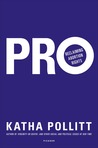
Fight for Your Right to Pro-Choice. Pro: Reclaiming Abortion Rights, by Katha Pollitt.

When drafting this post in my head I thought my interest in the topic would be easily explained, “what America does, the UK has a horrible habit of mimicking a couple of years later.”

That was in reference to the various 5-week bans, and ‘heartbeat bills’ in May that have been trending topics in the US. Even as I finished editing this post the city council of Waskom, Texas passed ordinance to prevent abortion clinics from opening in the city.

Then Jeremy Hunt opened his mouth.

How dare he make me thankful for Gove’s cocaine anecdote.

So much for ‘a couple of years later’.

You want to believe it’s ‘sound bite policy’ – something said just to appeal to a voter demographic. However, considering we’re in the timeline where a candidate unabashedly suggested abolishing council housing, you can’t blame me for feeling a need to brace and buttress my opinions.

REVIEW ★ ★ ★ ⅔

Pro: Reclaiming Abortion RightsPro: Reclaiming Abortion Rights by Katha Pollitt


Books about the abortion debate are controversial, Pro: Reclaiming Abortion Rights will be no different. Appealing to the ‘muddled-middle’, here Katha Pollitt presents an unapologetic examination of anti-abortion rhetoric and defence of reproductive justice’s credo.

As a matter of housekeeping, the use of the term ‘anti-abortion’ here is to be consistent with the book, and to differentiate between those who label themselves pro-life while only opposing access to the procedure, and those who work reduce the need for abortions.

Pro tackles three elements of the abortion debate: what are the key anti-abortion arguments, how accurate are these arguments, and how can the pro-choice side present a stronger opposition. Contrary to my dry explanation, the text is accessible and reads with personality; think ‘transcript of a feminist podcast’.

Pollitt examines the key rhetoric of anti-abortion advocates unreservedly and raises questions that need to be asked. If the aim is to reduce unwanted pregnancies, why not advocate for extensive sex-ed and access to birth control? If the aim is to reduce the number of abortions performed, why target the procedure but not obstacles to parenthood like poverty and access to childcare? She also questions the, frankly, paternalistic roots of ‘permit but discourage’ compromises – like mandatory waiting periods and parental consent – and the limp-wristed defence of abortion that consistently frames women as victims.

However, as reasonable as Pollitt’s examination is, I worry that the book preaches to the proverbial choir. As abortion has shifted from a debatable topic to a marker of political identity, perhaps Pollitt wrote this knowing those opposed would only sneer at it. This is potentially the book’s main weakness. Writing on the assumption that her readers would be pro-choice, Pollitt’s tone sometimes shifts into soapboxing, and at times sarcasm. While for a pro-choice reader it can be vindicating in an ‘amen to that’ kind of way, I doubt it would appeal otherwise. I can see more than a few of the undecided or opposed being entirely put off reading. Given that the book aimed to address the debate, it’s counterproductive to chase readers back into their echo chambers.

The text is very America-centric, all the legislation mentioned is American though Pollitt happily references cases such as that of Savita Halappanavar* in Ireland. The book also overlooks the involvement of women of colour – both as defenders and advocates of reproductive healthcare, and individuals disproportionately affected by access to abortion – and at worst comes across as propping up white feminism exclusivity. The titular point, how the pro-choice side can reclaim the discussion, was the briefest part of the book. While yes, political expression should not be spoon fed, Pollitt’s viewpoints on this part could have been fleshed out a bit more for the sake of providing a clear opposition.

Despite its flaws; I would still recommend reading Pro, whether it’s a topic you are passionate about or one you would like to learn more about. If you are pro-life then it’s worth interacting with the opposing view to root out any inconsistencies in your opinions, no view is beneath fact-checking, after all. If you are one of the ‘muddled middle’, this book may help subvert some of the more harmful, but heart-tugging, exaggerations, and distortions thrown about by some of the less discerning anti-abortion advocates. As for those who are pro-choice, this is a sharp wake up call; if the defence of access to reproductive healthcare regurgitates variations of “the Pill isn’t just for sex”, and “what about fetal abnormalities”, the debate is going to be lost.


*Savita was refused an abortion in 2012 following an incomplete miscarriage, and whose death led to the passing of the Protection of Life During Pregnancy Act.

Pro: Reclaiming Abortion Rights, is published by Picador.

Follow the link to get your copy of Pro: Reclaiming Abortion Rights, by Katha Pollitt. It’s also available on Kindle, Kobo, and Nook.

We like Hive.co.uk.  Hive pay their taxes.

Like my reviews?  You can read all of them, and more, over at my blog!

Or follow me on Goodreads!

If you enjoy my writing, want to see more, or enjoy being randomly generous, you can leave a tip in my ko-fi jar.

“Do you think we’re over using the metaphor?”
“Nah, this is pop culture now.”

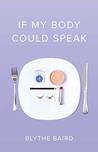
Can I make a slam-dunk pun for slam poetry? If My Body Could Speak, by Blythe Baird.

Oh god this is overdue.

卧槽 GIF - Panda Fml SoDone GIFs


April was National Poetry Month in the US so I tried to tag along but then a thing came up with Bookmarks.  A thing I might not be able to talk about yet, and that plan went the same way as Dolly Parton on an icy floor – tits up.

But!  But, I did read one collection of poems, ‘If My Body Could Speak’ by Blythe Baird.  If that name sounds familiar you’ve probably come across her on YouTube.  Her poem ‘When the Fat Girl Gets Skinny’ – this collection’s opener – has almost 3 millions views, making it one of the most popular videos on the Button Poetry channel.  Not bad for someone who’s only 22, hmm?

A poetry collection of feminists themes, if you’ve glanced at the news recently you can guess why I’ve spent more time screaming internally than writing.

If My Body Could Speak★ ★ ★ ★

If My Body Could Speak by Blythe Baird.

I have a complicated relationship with modern poetry.  If you need some context, check out my review of ‘the witch doesn’t burn in this one’.  I didn’t ‘get’ Milk and Honey, or the follow up collection.  Am I just getting old?  Are publishers prioritising Goodreads Choice Awards over Good editors?  Or, is it just really hard to translate the rhythm and feeling of spoken word poetry into text?

Probably the latter.  How can I be so certain?  Because I frickin’ love Blythe Baird’s readings.  Actually, on that note, if at any point you struggle with identifying a poem’s rhythm I would recommend googling whether there’s a video, or audio clip, of the poet performing the peice.  No one can better articulate the flow of a poem than the one who wrote it.

If My Body Could Speak could come under the umbrella categorisation of feminist poetry but that almost seems like doing the work a disservice.  Baird’s topics are deeply personal; sexuality and homophobia, body image and eating disorders, surviving sexual assault and rape culture.  All feminist topics but laid out raw, and honest in their experience*.  While a poem may appeal to a wider issue, and these may be the feelings of one woman, they speak to the reality shared by most women.  Young or old, we’ve all bit our lips when we’ve wanted to shout, felt the pang of disappointment when a male friend is misogynistic, or cried over obstacles we were never meant to overcome.  The reader can feel Baird in her work and it resonates like a tuning fork.

Due to the topics and style, comparisons might be drawn with amanda lovelace, and if you’ve previously enjoyed lovelace’s work do use that as a guide.  I found, however, that Baird writes with a voice that is rich and vivid, that is accessible without pretension.  Importantly for me, her poems take up space.  The majority of the poems are one or two pages long, there are no pages of one or two lines that read like discarded song lyrics or Instagram stories.  Something I found difficult to digest with other collections of modern poetry.  Yes, there is a little awkward use of the tab and enter key trying to match the spoken rhythm but not at all to the point of being clumsy or unreadable.  In fact I had a hard time putting the collection down.

Whether you’re here for the #MeToo relevancy or simple validation that, yes, someone out there too is frustrated with skirt length dress code violations, Blythe Baird’s second collection of poems is goldust.  Brief, precious, and dammit if I don’t want more.

Get your copy of ‘If My Body Could Speak’ here.


Baird – pronounced bared?  Bird?  Bard?  Appropriate that a poet would have a name that could have three meanings.

*trigger/content warnings as appropriate.  While Baird is not explicitly graphic, the poems are distinct enough they could be upsetting for some, particularly in the case where Baird writes of sexual assault.

~

I received my copy through NetGalley in exchange for a review, all opinions my own etc etc

sig

Like my reviews? You can read all of them, and more, over at my blog!

Or follow me on Goodreads!

If you enjoy my writing, want to see more, or enjoy being randomly generous, you can leave a tip in my ko-fi jar.