It’s all in the chromosomes. The Better Half, by Sharon Moalem.

My God what day is it?

I hope you’re all well and keeping at a safe social distance.  I am currently furloughed from work but the book news doesn’t stop.  Following a fantastic read in early March of Invisible Women by Caroline Criado Perez I haven’t been able to stop thinking about what all ‘this’ might mean for women.  Are we in the testing groups for coronavirus vaccines?  Will any vaccine or treatment respond differently to female bodies?  Hang on, more women surviving than men?  Or so the man on the news said.  My initial reaction was that it must be due to behaviours.  Women being more conscious with hand washing, men occupying more positions in work deemed essential services (wrong there btw), men being less likely to go to a doctor.  But then the flu affects men worse as well, I couldn’t help but wonder why.  Conveniently this cropped up in the middle of reading The Better Half by Dr Sharon Moalem, so I wasn’t left wondering for long…
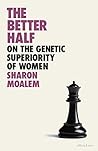


The Better Half: On the Genetic Superiority of WomenThe Better Half: On the Genetic Superiority of Women by Sharon Moalem: ★★★★

An image exists in fiction and our cultural hivemind of the weak woman. Incapable of survival without male guardianship, too frail to lift anything heavier than a baby, too feeble for feats of endurance. It’s nonsense, but the myth persists. Enter stage left Dr Sharon Moalem. Drawing on experience and research as a medic, geneticist and specialist in rare diseases, Moalem explores in The Better Half why women (or rather, XX chromosome carriers) consistently outperform men (respectively XY carriers) in areas such as immunity, stamina, and adaptability.

It is a thought-provoking premise, that genetically speaking bodies that carry XX chromosomes are stronger than those with XY (or by extension, any variation where only one X is present). I found it exceptionally well paired with Invisible Women by Caroline Criado Perez. In her book Perez talks about ‘male default thinking’ – the assumption that the male experience is the default, and everything female is an add-on. The Better Half does something similar in examining the assumption that male bodies are stronger, and everything female is a handicap. It’s a fascinating exploration not only of the survival advantages XX entails, but the clear need for reconsidering the male-centric view of the human body throughout science and medicine. Just why do women cope with disease better? Why are they unlikely to be colourblind? And why do women suffer more auto-immune conditions?

For the most part the writing is accessible, suffice to say that even I – nought but a lowly film grad – could understand the science. However, there were moments where it felt Moalem couldn’t fix on which ‘mode’ to write in. The established specialist addressing their peers, or as easy and breezy pop-science? There were a few tangents, and a couple of paragraphs that I had to double read. That said, after I had finished the initial text and skimmed through the notes and references there were the expansions I had needed. So I don’t know if this is really an issue with the book, or just that I read it as an eBook. Someone with a print version tell me if there are footnotes instead of a notes section.

On the topic of accessibility I have to veer off into Gender Politics for a bit. When I read the title and summary I did worry The Better Half would be ‘terfy’ – endorsing Trans Exclusionary Radical Feminist views on gender and sex. If you had that same worry, you really don’t need to. While not much page space if given to trans or intersex bodies, very early on Moalem draws a sharp line between a person’s gender identity and their genetic sex. This book is concerned with the contents of your chromosomes, not the contents of your pants.

I haven’t been able to get The Better Half out of my head since finishing it (particularly the immunity part). I’ve already mentioned Invisible Women, I’d also recommend this to anyone who enjoyed The Gendered Brain by Gina Rippon, and/or Inferior by Angel Saini. To everyone else, if you’ve ever looked at a female anglerfish or spider and wondered why nature endowed them with size and survivability over their male counterparts, this is a book for you.


The Better Half: On the Genetic Superiority of Women,
by Sharon Moalem, is published by Allen Lane, an imprint of Penguin Random House.

Follow the link to get your copy of The Better Half: On the Genetic Superiority of Women, by Sharon Moalem.

We like Hive.co.uk.  Hive pay their taxes.

I received my copy through NetGalley in exchange for a review, all opinions my own etc etc

Like my reviews?  You can read all of them, and more, over at my blog or you can follow me on Goodreads.

If you enjoy my writing, want to see more, or enjoy being randomly generous, you can leave a tip in my ko-fi jar.

The Reading Rush 2019

It’s that time of year again!

From July 22nd to July 28th Ariel will be dragging our library bound bodies outdoor- oh no, wait, there’s not a read outside challenge this year.

For the uninitiated The Reading Rush is the new name for BookTubeAThon, one week where readers around the world try to read as much as they can. That could be one book for you, it could be ten, either way it’s a great opportunity to chip into your to-be-read pile.

This year there is a fancy new website where you can track your activity, interact with other readers, and see all the other info about challenges and giveaways. Here’s the link.

I’ve signed up, I’m in the process of working out what to read for the week, and if you want to add me go ahead.

<<and here is where I’ll edit in my reading list if I don’t get around to filming a video before the readathon starts>>

Like my writing?  You can read more over on my blog!

Or follow me on Goodreads!

If you enjoy my writing, want to see more, or enjoy being randomly generous, you can leave a tip in my ko-fi jar.
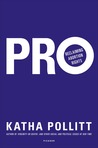
Fight for Your Right to Pro-Choice. Pro: Reclaiming Abortion Rights, by Katha Pollitt.

When drafting this post in my head I thought my interest in the topic would be easily explained, “what America does, the UK has a horrible habit of mimicking a couple of years later.”

That was in reference to the various 5-week bans, and ‘heartbeat bills’ in May that have been trending topics in the US. Even as I finished editing this post the city council of Waskom, Texas passed ordinance to prevent abortion clinics from opening in the city.

Then Jeremy Hunt opened his mouth.

How dare he make me thankful for Gove’s cocaine anecdote.

So much for ‘a couple of years later’.

You want to believe it’s ‘sound bite policy’ – something said just to appeal to a voter demographic. However, considering we’re in the timeline where a candidate unabashedly suggested abolishing council housing, you can’t blame me for feeling a need to brace and buttress my opinions.

REVIEW ★ ★ ★ ⅔

Pro: Reclaiming Abortion RightsPro: Reclaiming Abortion Rights by Katha Pollitt


Books about the abortion debate are controversial, Pro: Reclaiming Abortion Rights will be no different. Appealing to the ‘muddled-middle’, here Katha Pollitt presents an unapologetic examination of anti-abortion rhetoric and defence of reproductive justice’s credo.

As a matter of housekeeping, the use of the term ‘anti-abortion’ here is to be consistent with the book, and to differentiate between those who label themselves pro-life while only opposing access to the procedure, and those who work reduce the need for abortions.

Pro tackles three elements of the abortion debate: what are the key anti-abortion arguments, how accurate are these arguments, and how can the pro-choice side present a stronger opposition. Contrary to my dry explanation, the text is accessible and reads with personality; think ‘transcript of a feminist podcast’.

Pollitt examines the key rhetoric of anti-abortion advocates unreservedly and raises questions that need to be asked. If the aim is to reduce unwanted pregnancies, why not advocate for extensive sex-ed and access to birth control? If the aim is to reduce the number of abortions performed, why target the procedure but not obstacles to parenthood like poverty and access to childcare? She also questions the, frankly, paternalistic roots of ‘permit but discourage’ compromises – like mandatory waiting periods and parental consent – and the limp-wristed defence of abortion that consistently frames women as victims.

However, as reasonable as Pollitt’s examination is, I worry that the book preaches to the proverbial choir. As abortion has shifted from a debatable topic to a marker of political identity, perhaps Pollitt wrote this knowing those opposed would only sneer at it. This is potentially the book’s main weakness. Writing on the assumption that her readers would be pro-choice, Pollitt’s tone sometimes shifts into soapboxing, and at times sarcasm. While for a pro-choice reader it can be vindicating in an ‘amen to that’ kind of way, I doubt it would appeal otherwise. I can see more than a few of the undecided or opposed being entirely put off reading. Given that the book aimed to address the debate, it’s counterproductive to chase readers back into their echo chambers.

The text is very America-centric, all the legislation mentioned is American though Pollitt happily references cases such as that of Savita Halappanavar* in Ireland. The book also overlooks the involvement of women of colour – both as defenders and advocates of reproductive healthcare, and individuals disproportionately affected by access to abortion – and at worst comes across as propping up white feminism exclusivity. The titular point, how the pro-choice side can reclaim the discussion, was the briefest part of the book. While yes, political expression should not be spoon fed, Pollitt’s viewpoints on this part could have been fleshed out a bit more for the sake of providing a clear opposition.

Despite its flaws; I would still recommend reading Pro, whether it’s a topic you are passionate about or one you would like to learn more about. If you are pro-life then it’s worth interacting with the opposing view to root out any inconsistencies in your opinions, no view is beneath fact-checking, after all. If you are one of the ‘muddled middle’, this book may help subvert some of the more harmful, but heart-tugging, exaggerations, and distortions thrown about by some of the less discerning anti-abortion advocates. As for those who are pro-choice, this is a sharp wake up call; if the defence of access to reproductive healthcare regurgitates variations of “the Pill isn’t just for sex”, and “what about fetal abnormalities”, the debate is going to be lost.


*Savita was refused an abortion in 2012 following an incomplete miscarriage, and whose death led to the passing of the Protection of Life During Pregnancy Act.

Pro: Reclaiming Abortion Rights, is published by Picador.

Follow the link to get your copy of Pro: Reclaiming Abortion Rights, by Katha Pollitt. It’s also available on Kindle, Kobo, and Nook.

We like Hive.co.uk.  Hive pay their taxes.

Like my reviews?  You can read all of them, and more, over at my blog!

Or follow me on Goodreads!

If you enjoy my writing, want to see more, or enjoy being randomly generous, you can leave a tip in my ko-fi jar.

“Do you think we’re over using the metaphor?”
“Nah, this is pop culture now.”

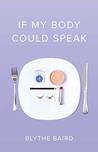
Can I make a slam-dunk pun for slam poetry? If My Body Could Speak, by Blythe Baird.

Oh god this is overdue.

卧槽 GIF - Panda Fml SoDone GIFs


April was National Poetry Month in the US so I tried to tag along but then a thing came up with Bookmarks.  A thing I might not be able to talk about yet, and that plan went the same way as Dolly Parton on an icy floor – tits up.

But!  But, I did read one collection of poems, ‘If My Body Could Speak’ by Blythe Baird.  If that name sounds familiar you’ve probably come across her on YouTube.  Her poem ‘When the Fat Girl Gets Skinny’ – this collection’s opener – has almost 3 millions views, making it one of the most popular videos on the Button Poetry channel.  Not bad for someone who’s only 22, hmm?

A poetry collection of feminists themes, if you’ve glanced at the news recently you can guess why I’ve spent more time screaming internally than writing.

If My Body Could Speak★ ★ ★ ★

If My Body Could Speak by Blythe Baird.

I have a complicated relationship with modern poetry.  If you need some context, check out my review of ‘the witch doesn’t burn in this one’.  I didn’t ‘get’ Milk and Honey, or the follow up collection.  Am I just getting old?  Are publishers prioritising Goodreads Choice Awards over Good editors?  Or, is it just really hard to translate the rhythm and feeling of spoken word poetry into text?

Probably the latter.  How can I be so certain?  Because I frickin’ love Blythe Baird’s readings.  Actually, on that note, if at any point you struggle with identifying a poem’s rhythm I would recommend googling whether there’s a video, or audio clip, of the poet performing the peice.  No one can better articulate the flow of a poem than the one who wrote it.

If My Body Could Speak could come under the umbrella categorisation of feminist poetry but that almost seems like doing the work a disservice.  Baird’s topics are deeply personal; sexuality and homophobia, body image and eating disorders, surviving sexual assault and rape culture.  All feminist topics but laid out raw, and honest in their experience*.  While a poem may appeal to a wider issue, and these may be the feelings of one woman, they speak to the reality shared by most women.  Young or old, we’ve all bit our lips when we’ve wanted to shout, felt the pang of disappointment when a male friend is misogynistic, or cried over obstacles we were never meant to overcome.  The reader can feel Baird in her work and it resonates like a tuning fork.

Due to the topics and style, comparisons might be drawn with amanda lovelace, and if you’ve previously enjoyed lovelace’s work do use that as a guide.  I found, however, that Baird writes with a voice that is rich and vivid, that is accessible without pretension.  Importantly for me, her poems take up space.  The majority of the poems are one or two pages long, there are no pages of one or two lines that read like discarded song lyrics or Instagram stories.  Something I found difficult to digest with other collections of modern poetry.  Yes, there is a little awkward use of the tab and enter key trying to match the spoken rhythm but not at all to the point of being clumsy or unreadable.  In fact I had a hard time putting the collection down.

Whether you’re here for the #MeToo relevancy or simple validation that, yes, someone out there too is frustrated with skirt length dress code violations, Blythe Baird’s second collection of poems is goldust.  Brief, precious, and dammit if I don’t want more.

Get your copy of ‘If My Body Could Speak’ here.


Baird – pronounced bared?  Bird?  Bard?  Appropriate that a poet would have a name that could have three meanings.

*trigger/content warnings as appropriate.  While Baird is not explicitly graphic, the poems are distinct enough they could be upsetting for some, particularly in the case where Baird writes of sexual assault.

~

I received my copy through NetGalley in exchange for a review, all opinions my own etc etc

sig

Like my reviews? You can read all of them, and more, over at my blog!

Or follow me on Goodreads!

If you enjoy my writing, want to see more, or enjoy being randomly generous, you can leave a tip in my ko-fi jar.

Take me back to Titanic. Gilded Lives, Fatal Voyage by Hugh Brewster

We’re only a fortnight away from April and I’ve already read three books about the Titanic. Don’t worry, I won’t put you through three posts.  Two of the three have been passenger accounts, The Loss of the Titanic by Lawrence Beesley, and Women of the Titanic Disaster by Sylvia Caldwell, both second class passengers who survived the disaster.  While I have opinions on them as pieces of literature, it doesn’t feel quite right to review them.  After all they are personal accounts of one of the world’s worst maritime disasters and biggest losses of life at sea before the sinking of the Wilhelm Gustloff in 1945.

My journey with Titanic began long before James Cameron convinced Hollywood to build him replica in Mexico*.  The Titanic is a favourite topic of my father’s, our staircase is a mini exhibit of paintings, a reproduction of the ship’s bell, an airfix model that I glance at every time I leave my bedroom, and I know there is more to the collection in the loft.  Unsurprisingly the interest passed on to me.  Apart from getting to see the ship intact (for which I’m very thankful to the team behind Titanic: Honor and Glory), I have never wanted to be on the Titanic, I have never wanted to know how I would react to being on a sinking ship.  I have, however, never felt satisfied with just knowing the details of the sinking, I have always been more interested in the people on board.  Who were they, where had they come from, why were they going to America, did they live, did they lose anyone in the sinking, how did they survive?    Enter on the port bow, Gilded Lives, Fatal Voyage, by Hugh Brewster.

Gilded Lives, Fatal Voyage: The Titanic's First-Class Passengers and Their WorldGilded Lives, Fatal Voyage: The Titanic’s First-Class Passengers and Their World by Hugh Brewster

Much has been written about the sinking of the Titanic and everyone knows the stories, the band playing to the very end, the lack of lifeboats, the freezing water, and so on. In Gilded Lives, Fatal Voyage: The Titanic’s First-Class Passengers and Their World, author Hugh Brewster draws on twenty-five years of experience with the Titanic to explore the lives and times of the ship’s first-class passengers. There are the most famous names of the Titanic story, like Molly Brown and J.J. Astor, and some more unfamiliar, like Frank Millet, all illustrating just what a microcosm of Edwardian society was on board.

Gilded Lives, Fatal Voyage can be roughly divided into three; first-class passengers boarding at Cherbourg with biographies of passengers either as they appear in the Titanic story, or in relation to a subject of life on board, such as segueing from ladies evening wear to Lucile Lady Duff Gordon’s life. Up until the collision when the focus is turned to the experience of previously mentioned passengers during the sinking; using both survivor accounts and a certain amount of expert conjecture to piece together the last moments of those who didn’t make it to a lifeboat. Then lastly it deals with the aftermath with short epilogues to the passenger’s stories, what they did with their lives after the sinking, when they died.

It is an incredibly detailed book, exploring histories and lives of passengers that even some ardent Titanic enthusiasts may find themselves learning something new. I certainly did, although having a lifelong curiosity of the Titanic I had barely heard of Archie Butt, Francis Millet and W.T Stead, and certainly not in connection to the ship, and I very much appreciate not having to read over the same quartet of Astor, Strauss, Guggenheim, and Ismay. That is something this book has in spades, evidence that there’s more to the Titanic than the glimpsed details in James Cameron’s movie. However, if you are new to the topic, perhaps have only seen the 1997 film, I don’t think any of the information within will be lost on you. Brewster writes in a style that is accessible, unsurprising perhaps considering he has written middle-grade books also on the Titanic, and can easily be dipped in and out of, or read in long sittings.

I recommend it with a warning, however. If you want a step-by-step guide to daily life on the Titanic as a first-class passenger a la The World of Downton Abbey you might want to stick with Julian Fellowes and A Night to Remember, though I would suggest that book if you’re interested in the Titanic regardless. That’s not to say there is no detail about the voyage, only that I found much of it was used to link one paragraph and another, one passenger and another. In some places the wealth of detail can be difficult to parse through. Biographies of highlighted passengers can be a little drawn out and tangent away, describing the lives of a passenger’s siblings, or a murder one was associated with but not a witness to. If I’m honest there were times when I forgot which passenger was connected to the sentence I was reading. To a degree I wonder if that was caused by the book’s structure, it felt as though Brewster (or his editor…) couldn’t decide whether chapters should be divided by the progress of the voyage, or if each chapter should focus on one passenger in particular.

While a part of me was a little frustrated with the digressions, having finished the book I can see how even the most distantly related person or event was tied to the voyage of the Titanic. It gives an impressive insight to the context of the disaster, both historically and at a more general society level. Teddy Roosevelt’s military aide shared the same deck space with a chairman of the White Star Line; Madeleine Astor, a teen bride to one of the richest men in the world, walked down the iconic grand staircase at the same time as women, such as Lucile Lady Duff Gordon and Edith Rosenbaum/Russell, who were using fashion to assert their independence and agency six years before the Women’s Suffrage would make headline news. Yes, perhaps an opportunity was missed to show the glamour of the Gilded Age; how it was concentrated in one ship whose voyage would signal not only the end of the golden age of transatlantic liners but of Gilded Age itself before it would be shattered by World War One. But, I think the title must be kept in mind, Gilded Lives, not Gilded Voyage. If you are interested in the Edwardian world, in the world of the Titanic’s passengers, then do pick up this book.sig

Like my reviews? You can read all of them, and more, over at my blog!

Or follow me on Goodreads!

If you enjoy my writing, want to see more, or enjoy being randomly generous, you can leave a tip in my ko-fi jar.

 

*  Yes, yes, Titanic is my favourite film, sue me, I’m a dumb romantic, Kate Winslet is pretty, and it was the perfect fusion of the Titanic story and 90s lipstick.  And did you know you can see mountains in the background of the famous ‘flying’ scene in the non-remastered edit of the film?

Image result for titanic rose dinner

Great Women, Greater Voices. So Here I Am by Anna Russell.

It took me quite a long time to develop a voice, and now that I have it, I am not going to be silent. —Madeleine Albright

It’s Women’s History Month in the UK right now, I don’t know if that applies internationally but either way it’s a good time to think about the voices that have been lost to history.  Were they just ignored and failed to be written down?  Were they actively suppressed because of their sex, their gender identity, their race, or their sexuality?  In most cases it would be both, let’s be honest.  Even the Bronte sisters submitted their works under male pseudonyms, works that went on to define Gothic fiction, just in case the mere suggestion of *gasp* the feminine would have their manuscripts ignored as scrap.

In fact there’s a brilliant lecture by Mary Beard on the topic of women’s public voices, “Oh Do Shut Up Dear”, and here’s a link to a transcript and audio version.  If women of the past found getting published hard, getting a spot on a stage or behind a microphone was worse.  So how fortunate is it that I just finished “So Here I Am: Speeches by Great Women to Empower and Inspire” by Anna Russell.


So Here I Am: Speeches by great women to empower and inspireSo Here I Am: Speeches by great women to empower and inspire by Anna Russell

My rating: 3 of 5 stars

So here we are, 2019. We know the suffragettes, we know jokes about 70’s feminists burning their bras, and when asked to quote a woman we could probably rattle out “Ain’t I a Woman?” even though Sojourner Truth* never said it. Not exactly a great legacy for 150 so years worth of women’s activism, right?

So Here I Am: Speeches by Great Women to Empower and Inspire by Anna Russell aims to equal the balance. Drawing together some of the defining speeches by notable women of the last two centuries, touching on topics from gender equality, to race, LGBT+, civil and human rights, war, and science.

There is an obvious comparison to be made with Good Night Stories for Rebel Girls and I would recommend So Here I Am as a companion for it on your bookshelf. The language is a little denser, so maybe have it on your shelf, not the kids’, but it does follow a very similar structure. Each entry includes a short biography of the speaker with some context of their speech, in e-book this was about a page worth, followed by an illustration (done by Camila Pinheiro) and an extracted version of the speech, again about an e-book’s page worth of text.

Going into it I admit I was worried it might be a little ‘white feminism’s greatest hits’, but Russell’s choices for this compilation give a great view of the scope of women’s activism, both in terms of diversity and their causes. Yes, there are the ‘big names’ like Michelle Obama, and J.K. Rowling, but there are also women you may have heard of but not known why they were influential, and others, like Wangari Maathai, that may be entirely new. In particular Victoria Woodull’s speech struck me for it’s relevancy. Her speech concerned ‘free love’, for contemporaries that meant that a relationship, particularly marriage, be easily dissolved, that the law should not get in the way of love. Even in that vaguest of summary I assume you can see the echoes of the equal marriage debate ongoing still.

The collection also diversifies as it follows a timeline of activism; it might start with Emmeline Pankhurst and Elizabeth I, but it goes on to include women such as Alicia Garza, Asmaa Mahfouz, Wilma Mankiller, and Sylvia Riveria. Further to that, in lieu of an epilogue there is a ‘More Women to Inspire’, encouraging the reader onto discover more women who fought for their cause but due to book space, or rights issues, didn’t get an individual mention.

My only grievance is that where the speeches were excerpted, it sometimes felt as though they’d been edited down a bit too much. I know this may be the fault of various estates/licences/etc only allowing so much to be quoted but some of the speeches still felt sapped. A speech is inspiring not for some choice lines that can be easily quoted, or turned into snippets for the news; the power it builds in the body of the speech, the winding up, before delivering a proverbial knock-out punch. I know, I know, most if not all the included speeches can be found in-full online, and that this book is much more something to dip into for inspiration, or as an appetite wetter; but sometimes the cutting was too exacting and a speech seemed like reading the notes prepped for a Women’s Studies written exam.

So Here I Am: Speeches by Great Women to Empower and Inspire by Anna Russell is a fantastic compilation of outspoken women, and is a wonderful salve if you’ve ever rolled your eyes after seeing the same twenty men, and the same twenty speeches listed ‘the greatest speeches in history’. Whether you have only just found a cause to champion or are a veteran, whether you want to know more female voices or just want some oratorical badasses on standby to empower you, I would heartily recommend making room on your bookshelf for this.

*The speech was transcribed twelve years after the fact, by Frances Gage who wrote Truth as having a southern slave dialect even though she was a lifelong New Yorker. Thankfully the version included in this book is from Truth’s friend, Marius Robinson, which better demonstrates Truth’s articulation.


I received my copy through NetGalley in exchange for a review, all opinions my own, etc etc


sig

Like my reviews? You can read all of them, and more, over at my blog!
Or follow me on Goodreads!

If you enjoy my writing, want to see more, or enjoy being randomly generous, you can leave a tip in my ko-fi jar.
Waste a couple of days in Glen Cove with cosy fiction. A Country Gift Shop Collection, by Vivian Conroy,

A Country Gift Shop Collection (Country Gift Shop #1-3)

A Country Gift Shop Collection by Vivian Conroy

My rating: 2 of 5 stars


Bringing together all three of Vivian Conroy’s Country Gift Shop cosy mysteries, A Country Gift Shop Collection offers fun, easy reads, perfect to cosy up with by the fire or by the pool.

In the one bundle are; Dead to Begin With, sees Vicky Simmons return to her childhood home of Glen Cove, Maine, to open her own gift shop with a British twist, only for a twenty year old murder mystery to resurface and turn simple shop owner into sleuth. In Grand Prize: Murder!, a cosy crime writer is in town but how will Vicky cope when life becomes deadlier than fiction? Then lastly, Written into the Grave, Vicky reads a grisly instalment in the local newspaper serial at breakfast and before lunch there are police cars at the cliffs just as the story predicted.

Conroy captures suspense with the best of them, and the mysteries are quite good and well thought-out. They’re not so difficult that you feel cheated when the killer is revealed (side point: I did find it a bit odd that a town with a low crime rate suddenly had three consecutive murders immediately following Vicky’s arrival), but not so obvious that you get bored three chapters in because you’ve already worked the mystery out. They compare well with the Agatha Raisin series by M.C. Beaton, and if you like those you will definitely like these.

Conroy also has an obvious talent for location descriptions, however, sometimes I found she indulged a little and that could distract from the story. For example, mid mystery, not shortly after a heated exchange with the town sheriff, our attention is directed instead to how soaps are packaged at the gift shop. Such info would have made sense at the beginning of the story, establishing the calm before the storm so to speak, but it did mess up the pace a little. Same with the characters, even Vicky meandered a little – one minute suggesting that the sheriff treat a suspect with more caution, only for the next chapter to open with her appealing for compassion.

Of course there are bits that are slightly cheesy but these are cosy mysteries, if there wasn’t a bit of melodrama I would think I’d picked up the wrong book!

I admit, these books probably weren’t for me (with that in mind take my rating with a large pinch of salt), and I admit, perhaps that was because I read all three one after another and may have reached – and crossed – my own upper limit for the genre. Regardless, if you like your cosy mysteries sweet and fun, A Country Gift Shop Collection is well worth treating yourself to, perfect for holiday reading or sneaking a chapter or two over the weekend.


A Country Gift Shop Collection is published by HQ Digital, and available for Kindle and Kobo.

I received my copy through NetGalley in exchange for a review, all opinions my own etc etc… sig

Like my reviews? You can read all of them, and more, over at my blog!  
Or follow me on Goodreads!


If you enjoy my writing, want to see more, or enjoy being randomly generous, you can leave a tip in my ko-fi jar.

Victorian True Crime and not a single Ripper in sight. The Lady in the Cellar by Sinclair McKay

Victorian London is almost synonymous with murder thanks to the infamous Ripper murders.  However, our image of such a place is often in the din and squalor of the slum boroughs, the middle and upper class districts are the preserve of Mary Poppins and A Christmas Carol in our public consciousness.  Grizzly murders never happen here, don’t they?

In The Lady in the Cellar, Sinclair McKay takes readers on a guided tour of the world surrounding 4, Euston Square where the body of an elderly woman was discovered, mostly decomposed, in the coal cellar of Severin and Mary Bastendorff’s boarding house.  McKay documents both the discovery and trial of the crime, but also the fallout for the suspects involved.  Not only a briefing of a tangled criminal case, McKay builds a detailed history of those involved, whether recreating the journey of an idealistic country born housemaid with music hall stars in her eyes, or the challenges faced being an immigrant in the bedlam of in one of the biggest and busiest cities in the world.

Written in prose it is fairly easy read, however, around halfway where McKay more or less transcribes and paraphrases court transcripts, and pamphlets the pace does lull to a drag as descriptions give way to ‘he said, she said’.  The book was at its greatest strength when McKay’s attention was given the freedom to examine the details that were not included in court or police reports.  For fans of true crime that prefer their books to have a single minded focus on the crime it may feel like a detour, or tangent, to explore the tense between wives and maids, or the social hierarchy in boarding houses; but for me it provided vital context and a view in to an alien time period.

Unlike many true crime books McKay does not linger on his own theories, rather the reader is directed to the actions and circumstances of those involved in the years that followed the trial.  The information is laid out for us to draw our own conclusions without dramatic suppositions.  There are gaps, for which I assume is the fault of time, and the reaction of press and public who were more interested the macabre details of the body, and suggestions of sexual scandal.  As such, I think it was appropriate for McKay not to throw theories around, and add to any sense of morbid exploitation of a woman’s death.  Perhaps that would bother you, not to have a concrete answer but that’s never stifled interest in the Ripper case, now has it?

Yet I feel something was missing, like McKay was asked to trim his word count by several thousand words.  As the book stands it’s a fantastic glimpse in to the Victorian world, and McKay’s descriptive prowess is remarkable.  I would heartily recommend this to any one interested in the Victorian period as it is more than just a ‘whodunit’, and fans of historical true crime alike.


Full disclosure: I received an advanced copy through NetGalley for free in exchange a review.  All opinions are my own, content of the final product may vary.

New Book! The Lady in the Cellar, by Sinclair McKay

Okay, okay, I admit, I picked this based on the cover.  It’s almost Halloween, I can’t be blamed for wanting a couple of Gothic thrills.  Plus, I’ve been playing a lot of Sunless Sea; throw me a book set in Victorian London with a murder mystery in a part of London that isn’t f__ing White Chapel, and I’m yours for the week.  Or how ever long it will take me to read it…

The Lady in the Cellar: Murder, Scandal, and Insanity in Victorian Bloomsbury.  


A corpse found in a coal cellar, written in prose like a good documentary, from the same author as The Secret Life of Bletchley Park, potentially upturning some presumptions about the Victorian middle class?  Add in some dramatic motives and you’ve basically got fives items to put in a pentagram to summon me.

It’s already available on Kindle and Harcover, I got mine through NetGalley – aren’t I lucky.  Because what would autumn be without a Gothic true tale of murder most mysterious.


Follow the link to get your copy of The Lady in the Cellar by Sinclair McKay.

We like Hive.co.uk.  Hive pay their taxes.

sig

21 Lessons for the 21st Century by Noah Yuval Harari.

21 Lessons for the 21st Century21 Lessons for the 21st Century by Yuval Noah Harari

My rating: 3 of 5 stars

Having examined humanity’s past in Sapiens: A Brief History of Humankind, and questioned its potential in Homo Deus: A Brief History of Tomorrow, Yuval Noah Harari returns to the present in 21 Lessons for the 21st Century to explore some of the challenges facing our immediate future. Through a collection of essays, Harari breaks life down in to I – Technology, how our relationship with technology could affect our future, II – Political, the need to draw political stories away from old habits like nationalism, III – Despair and Hope, old and new enemies like War and Terrorism, IV – Truth, our means of examining our present, and V – Resilience, what we have in us to not let the century down.

However, if you are coming to this expecting it to be a The 48 Laws of Power style manual for navigating the 21st Century, you will be disappointed. As stated in the introduction of the book, this is much more for prompting discussion than offering solutions. Think ‘lesson’ as in Socratic Method, debating over definition, rather than a school lesson teaching exam answers.

Harari offers incisive, thought provoking opinions on the challenges that may face us in the next one hundred years. The topics up for discussion are worthy of entire books themselves so there were points were I felt ideas were glossed over, Harari indulging his notion of a biotech dependant future at the neglect of discussing the potential social, economic, or perhaps martial consequences of Climate Change. That isn’t to say the shorter essay-chapters were not interesting; his thoughts on Terrorism, how the relative safety of the modern world made an echo chamber for, statistically, the minor threat of being caught in a terrorist attack, this was a point I found the most engaging. The discussion whether our current education system is still appropriate too was a subject I wanted him to explore further. I also found these the most relevant since it could apply to next week, not in ten or fifty years’ time like some of Harari’s other suppositions.

Harari stated his aim was to promote discussion, if I walked away from each reading session continuing the discussion in my head then he certainly accomplished that. Though to meet this goal you do need to step away from the book intermittently. Every essay-chapter would end with a question that neatly segued in to the next topic. A very handy structure for an editor, but for the reader looking for some kind of conclusion, or place to reflect it was obstructive. If this were a conversation Harari would be talking over your response because he thought of another point to add.

This was the key weakness for me. His tone felt condescending, not just in pace but in the treatment. Smartphones, and social media couldn’t be mentioned without a whiff of superiority, not wholly dissimilar from the attitude some journalists hold towards ‘millennials’. When it came to his opinions on religion the cynicism verged on patronising. I couldn’t find the beats of humour, or empathy, Harari misses the James Randi charm. If you can’t explain something without sounding superior, maybe rethink the wording.

I found this highlighted in the controversial final chapter. Minor spoiler, the last essay-chapter is on the benefits of meditation. Harari presents the opinion, based on his experience, that prioritising the development of mindfulness as skill through meditation may help humanity face the problems of the 21st century. In both standalone essay-chapters, and as supporting statements Harari points to religion as one of the most decisive and destructive influences on humanity’s progress; the dependence on myth and reinforced tribalism keeping us from forging a coexistent future. Only to turn and recommend Vipassana, a Buddhist meditation technique, as salve. While I recognise that meditative thought is not unique to Buddhists or religion in general, you cannot cherry pick the practice of Vipassana and ignore its religious origins. It felt appropriative and hypocritical, ‘No, no, you monks can’t meditate since you mix it up with God, I on the other hand can because I’m an atheist’, all too close to the kind of intellectual supremacy that gets waved around by online trolls, and cosmopolitan yuppies.

It was like Harari, rushed for an ending as his editor’s deadline loomed, scrambled for the nearest thing to a cohesive conclusive. Then in the acknowledgements Harari mentions that his publisher came up with the idea for the book. Red flags ahoy. One of the largest essay-chapters is on the future of our relationship with technology and data. Given the extent of research Harari must have done for Homo Deus: A Brief History of Tomorrow it makes sense that this would be something of a specialist subject for him. However, on the topic of Climate Change, easily one of the most pressing issues of the 21st century, Harari is rather brief. An important topic but also a complex problem which requires plenty of reading. Reading that would have been difficult to finish in time if writing on a short deadline. There were references to writing the book in early 2018, this might have just been a bit of date editing for the sake of relevance, but if it’s true, for a September 2018 release that’s a very quick turnaround for a writer – even if Harari was adapting previously released articles. That would also account for why there’s such a difference between Harari’s aim in the introduction, and the marketing approach.

I was torn how to rate this, my opinion falls somewhere near 2.5. I might not be one of the converted preaching it as revelatory but I’m not going to tell you it’s not worth reading. It prompts introspection and for us to assess the narratives at work in our own lives, a critical thinking skill rapidly growing. Harari raised some insightful points and left me thinking about his opinions for days, yet I’m not able to see past the feeling that this was rushed, or that I could hear the echo of a thousand 4chan users sneering ‘sheeple’.

Full disclosure: I received a digital copy through NetGalley in exchange for a review. The opinions are all my own. The content of my copy may not reflect that of the final product.

View all my reviews


P.S.

WordPress bonus, I requested this book because Tom Hiddleston quote Harari in an interview.  Yes, I know, sounds ridiculous but can you see how that would make it disappointing when the authors tone sounds rude?

sig